čeština
 slovenčina
 english
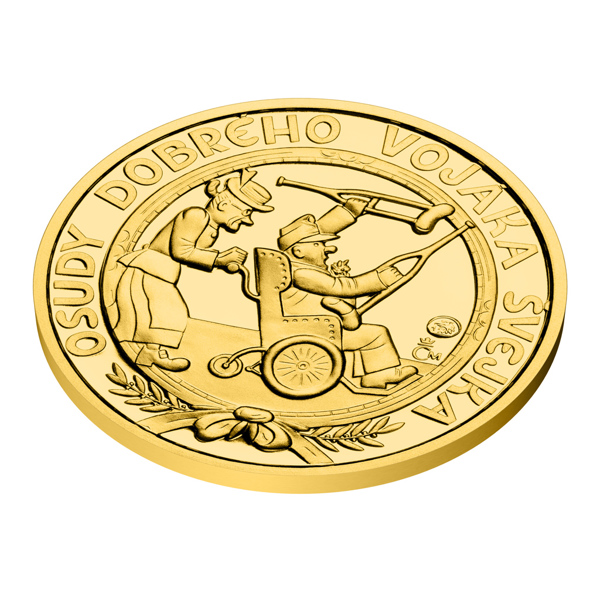
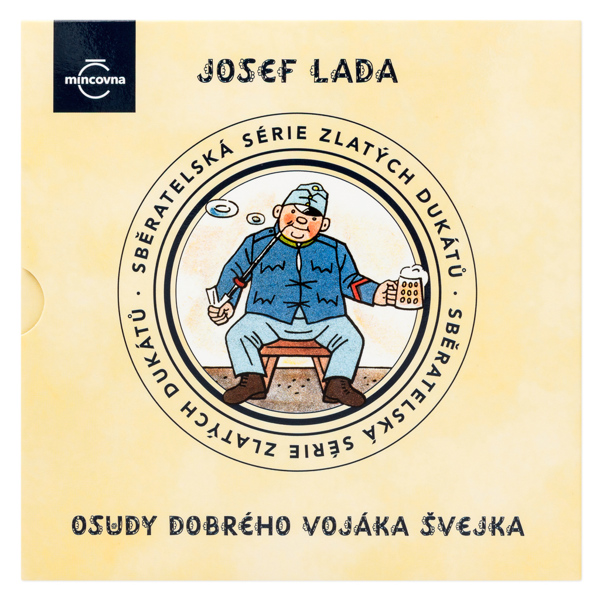
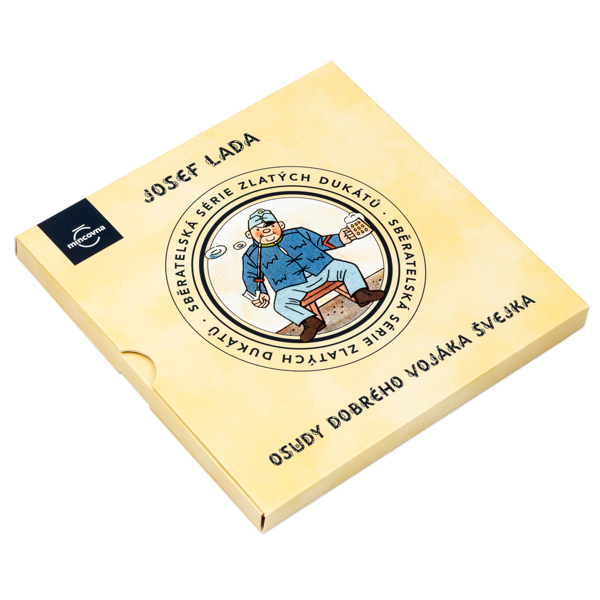
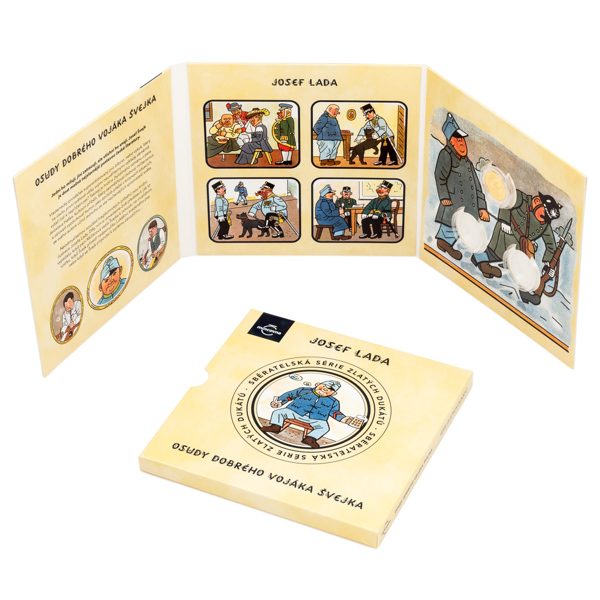
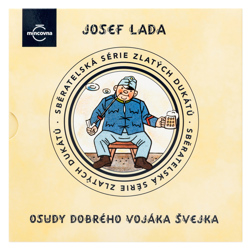
Gold ducat Josef Lada - Fateful Adventures of the Good Soldier Svejk - Belgrade proof
Current repurchase price
will be offered
Repurchase follows repurchase rules.
Personal pickup at the store
Product description
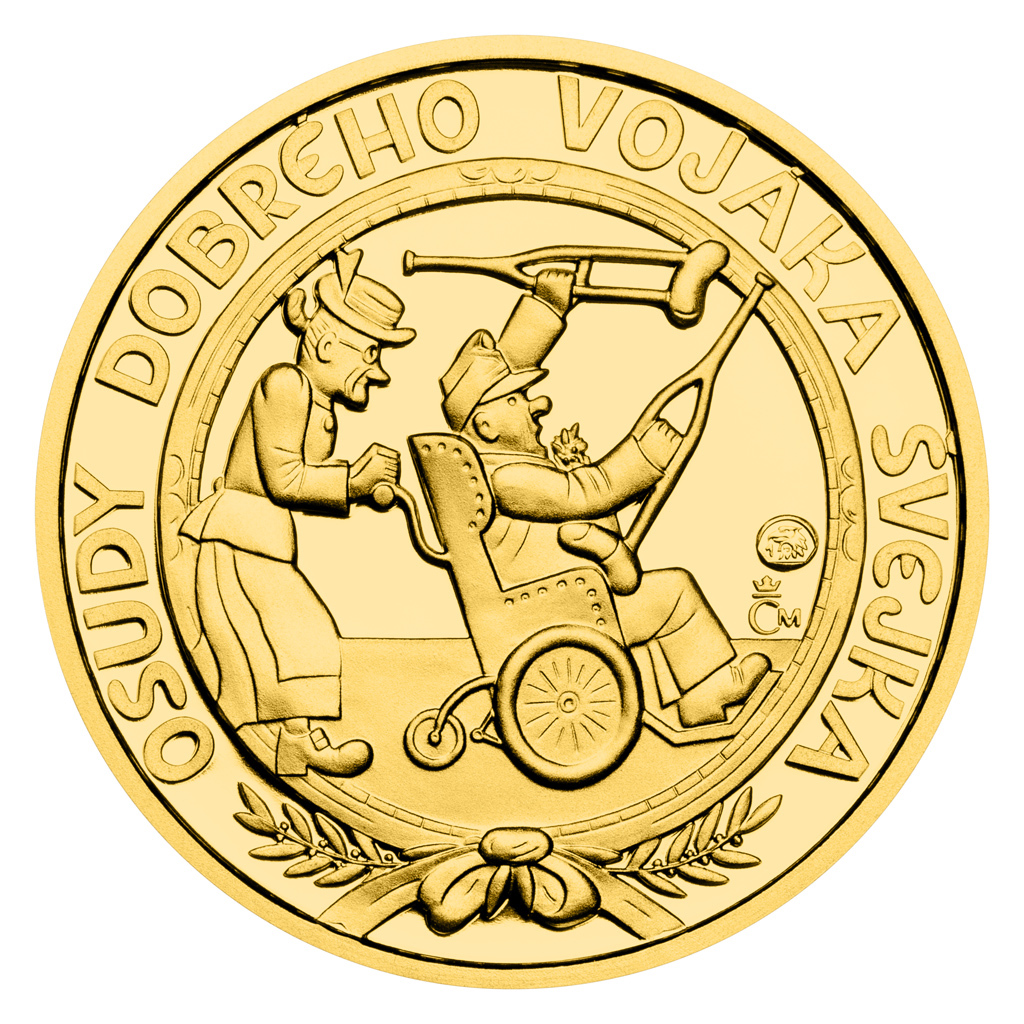
The Good Soldier Švejk, created by writer Jaroslav Hašek, is quite possibly the most famous character in Czech literature. Some love him, others condemn him, but everyone knows him. The miniseries of three gold ducats from the Czech Mint, which commemorates his life through illustrations by Josef Lada, opens with the famous scene featuring the wheelchair.
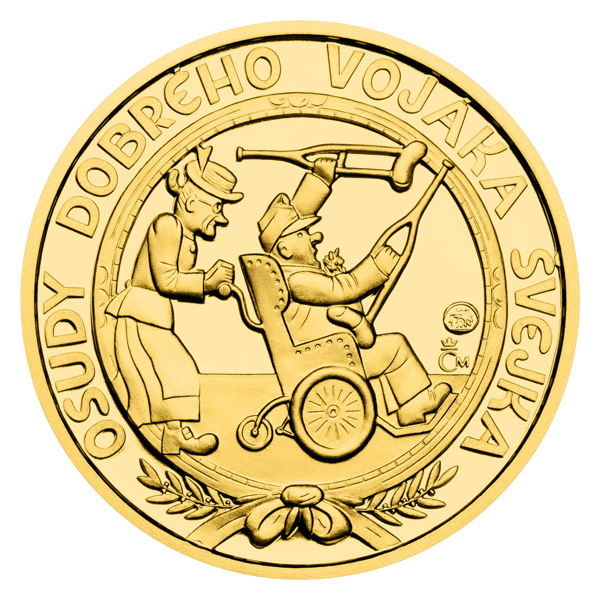
Yesterday morning, pedestrians on Prague’s main boulevards witnessed a scene that beautifully illustrates how, even in these grave and solemn times, the sons of our nation can set the finest examples of loyalty and devotion to the throne of the aged monarch. It seems to us that the times of the ancient Greeks and Romans have returned, when Mucius Scaevola allowed himself to be led into battle, heedless of his burned hand. The most sacred feelings and interests were beautifully demonstrated yesterday by a cripple on crutches, whom his elderly mother was transporting in a sick-carriage. This son of the Czech nation voluntarily, heedless of his infirmity, allowed himself to be taken to war to give his life and possessions for his emperor. And if his cry “To Belgrade!”resonated so vividly in the streets of Prague, it is only a testament to the fact that the people of Prague offer exemplary examples of love for their homeland and for the royal house.
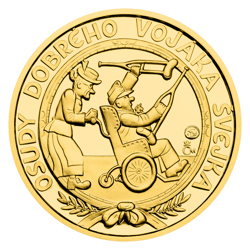
The scene in which Josef Švejk, at the dawn of World War I, rides to the conscription board in a wheelchair is one of the most famous in the entire satirical novel. It perfectly captures the hero’s ambiguity. Is he stupid, naive, and absurdly obedient? Or, on the contrary, does he cunningly exploit the rules and absurdity of the system in which he lives? Even after more than a century, students of Hašek’s work cannot agree on this. Whatever the truth may be, he alone retains humor and freedom of spirit…
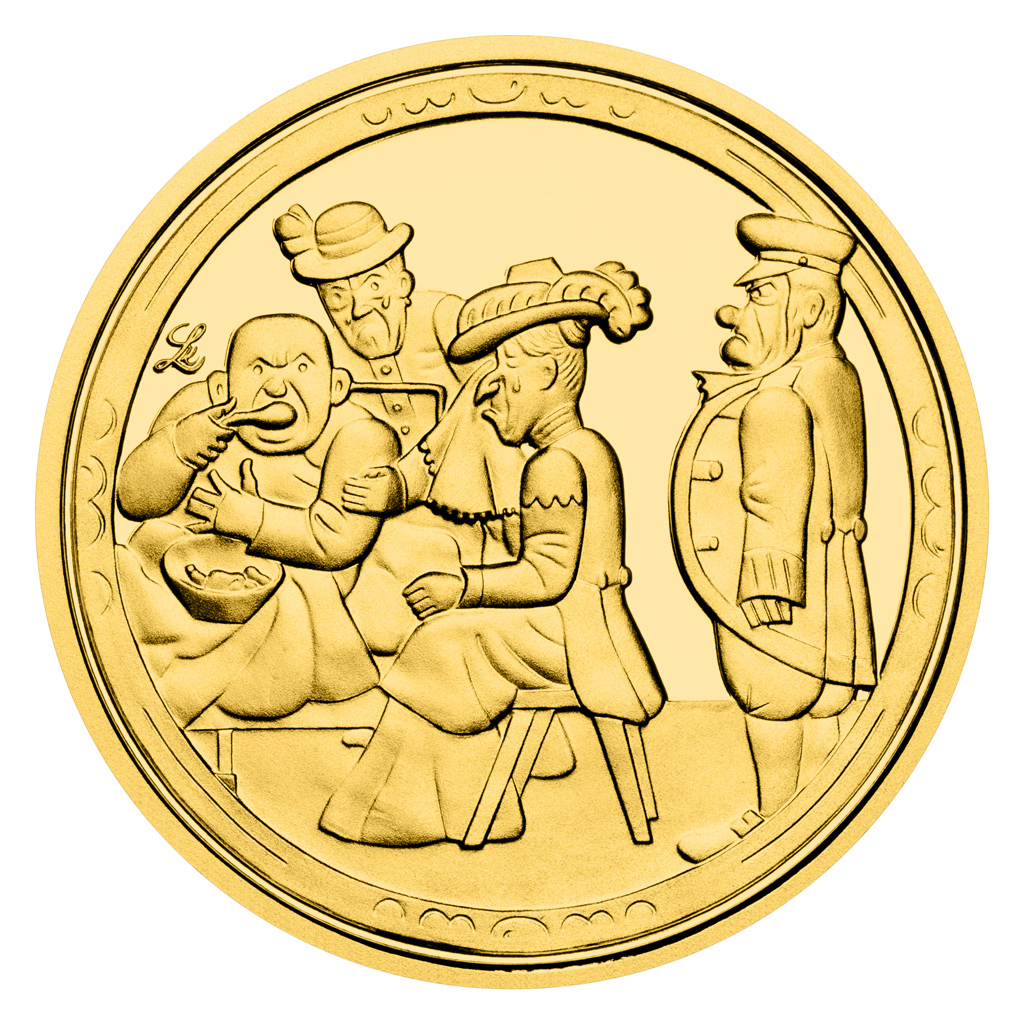
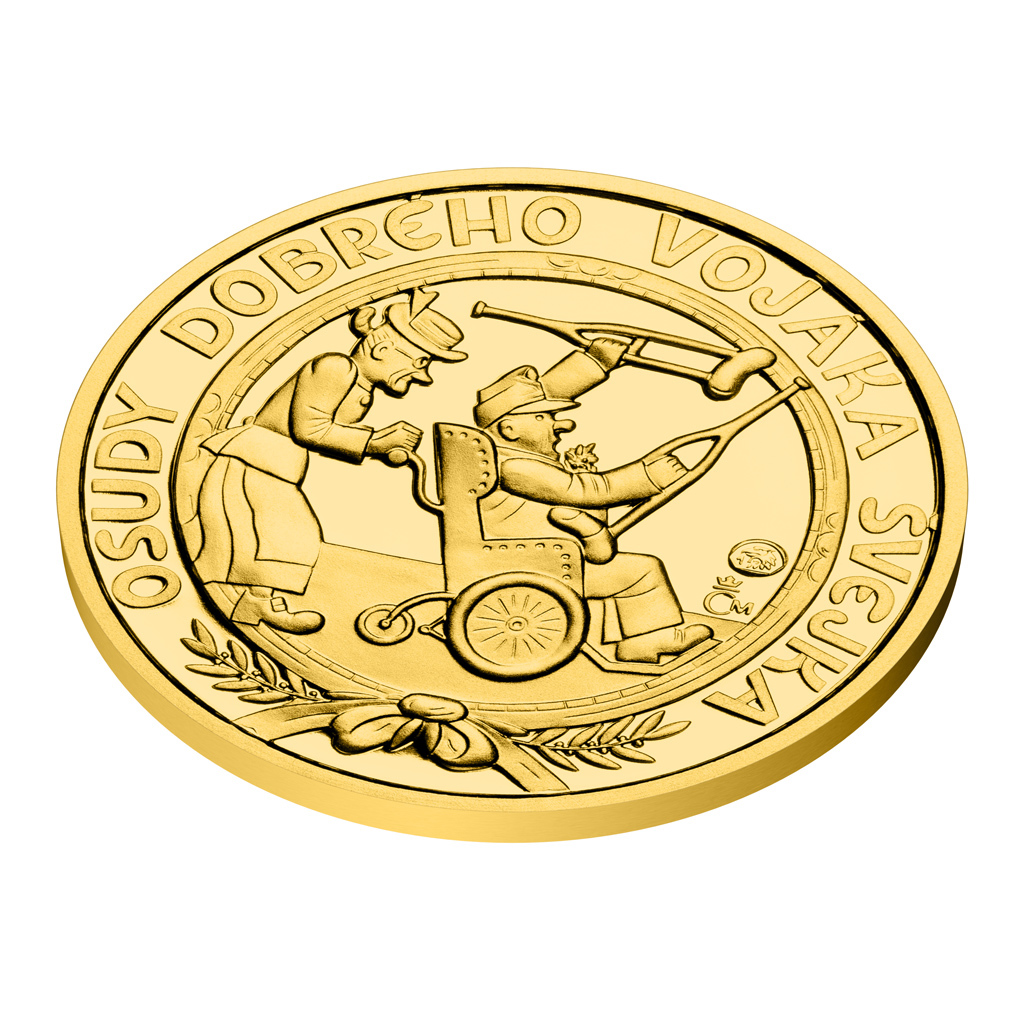
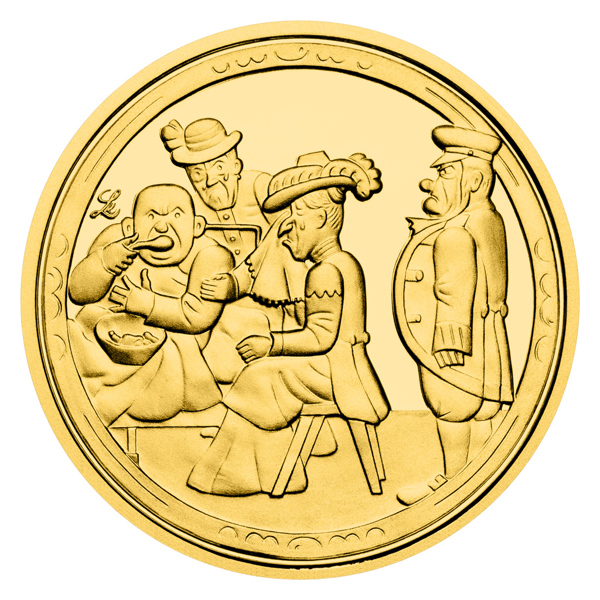
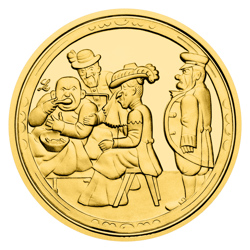
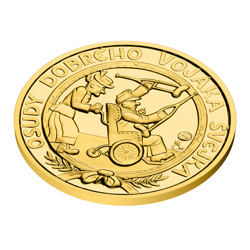
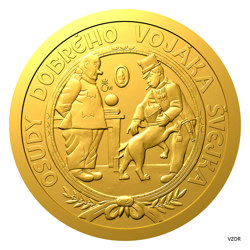
The gold ducat, the work of medalist Ludmila Kracíková, DiS., is a faithful relief reconstruction of Josef Lada’s book illustrations. The obverse side features not only Švejk riding in a wheelchair and waving his crutches, but also his maid—Mrs. Müllerová. The reverse side depicts the consequences of Švejk’s actions, which led to his being sent to a hospital for malingerers. There he was visited by Baroness von Botzenheim, who was so moved by the Czech’s devotion to the monarchy that she prepared a feast for him.
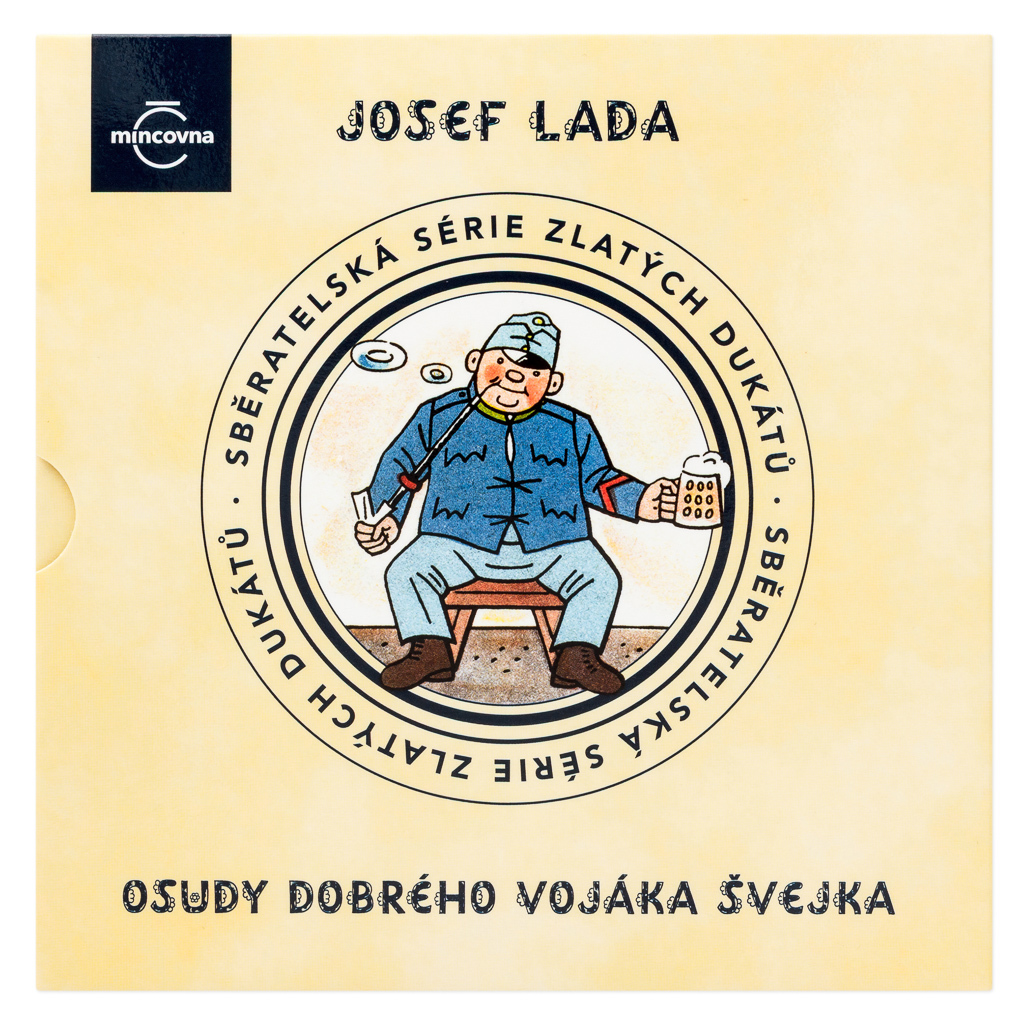
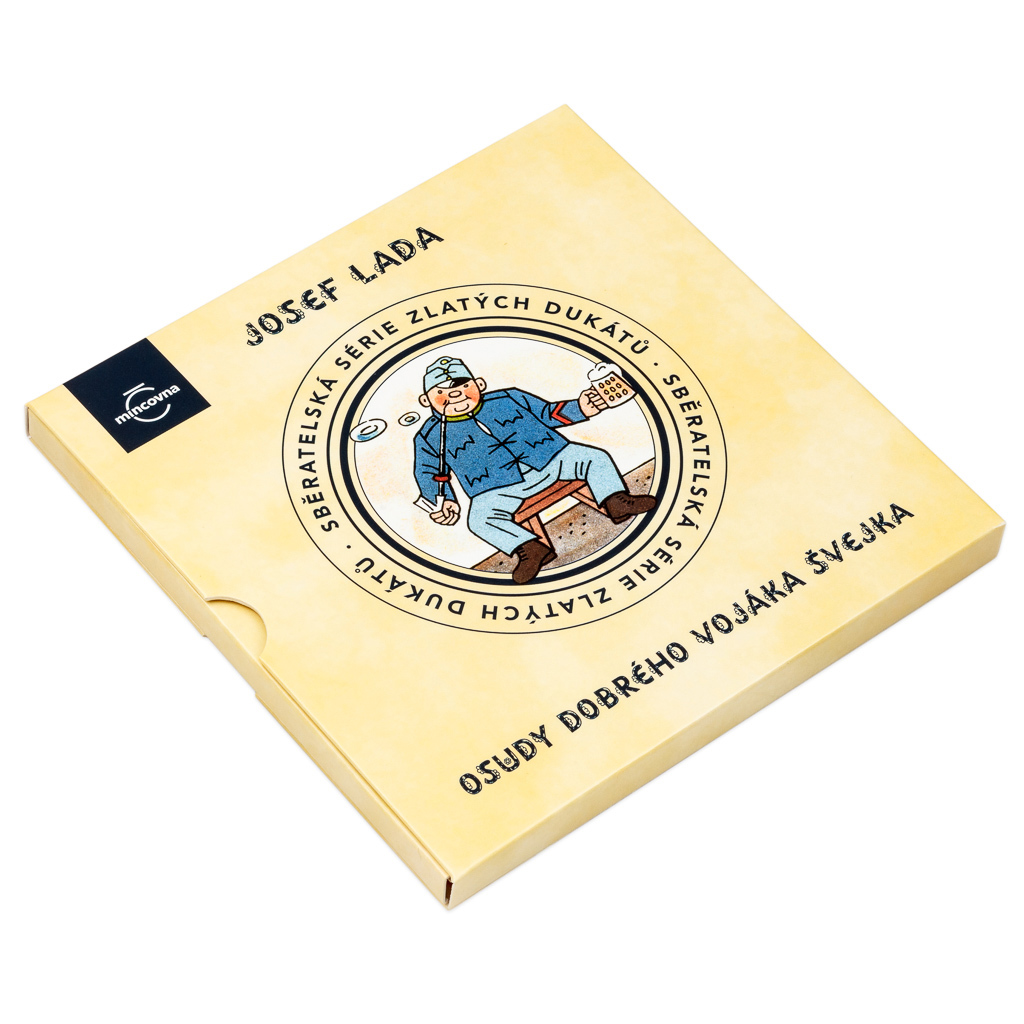
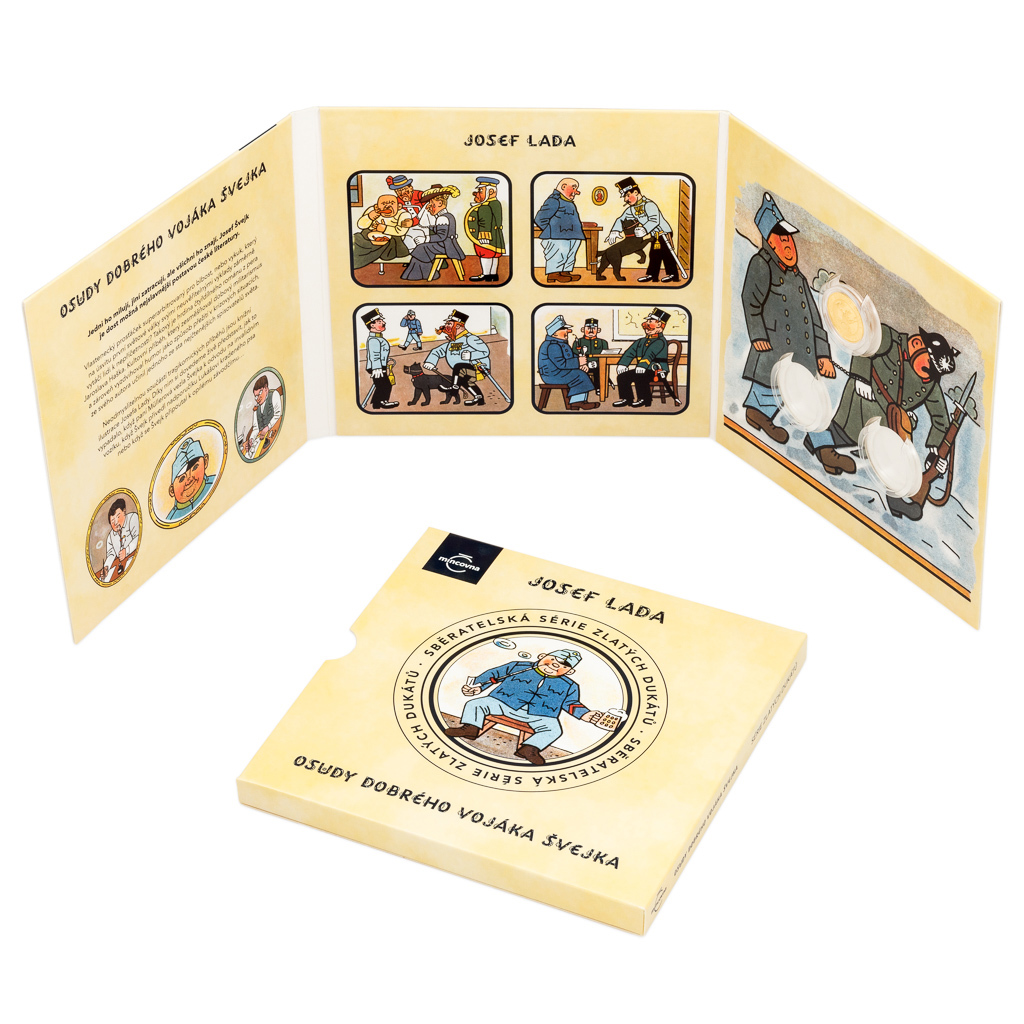
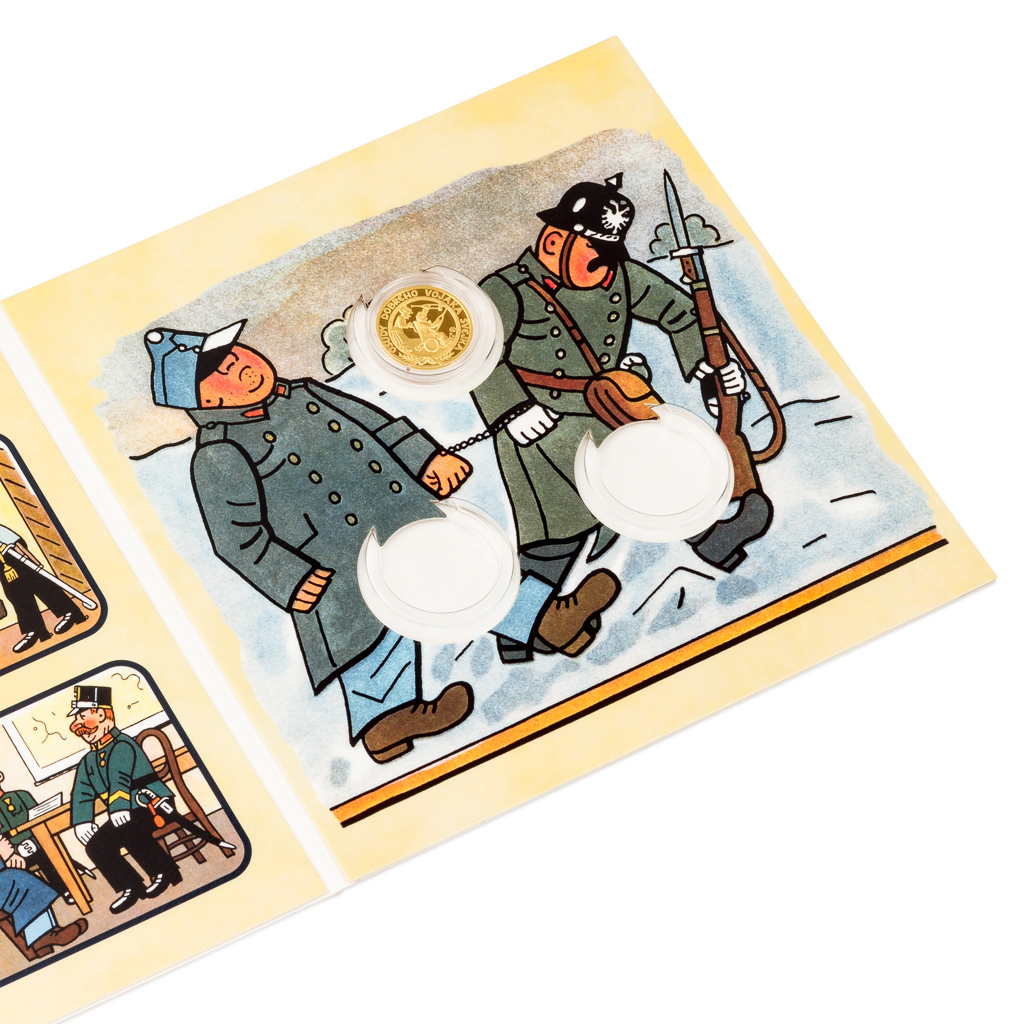
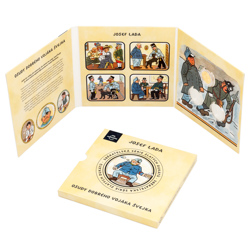
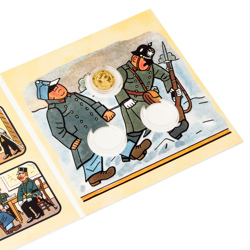
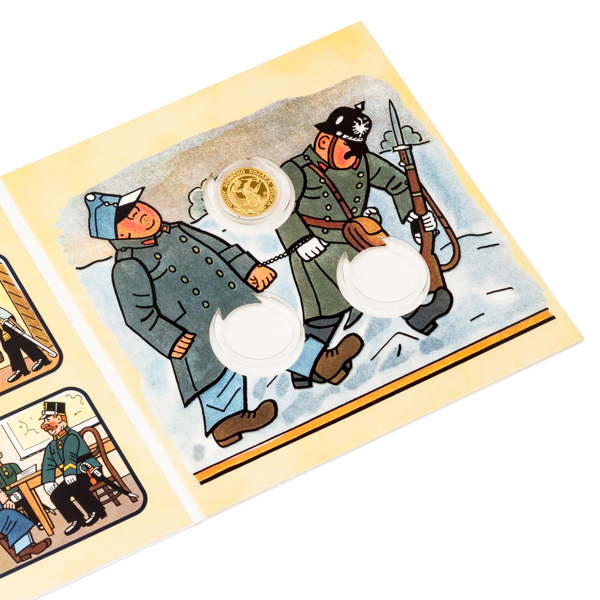
The first ducat is set in a cheerful collector’s album, which can accommodate two more issues.
Specifications
Related products

You have currently an unfinished repurchase request in your shopping cart. The shopping cart must be completed or deleted to create a new request.
To delete your repurchase cart and start a new repurchase, select "Delete repurchase cart and start a new repurchase".
If you want to continue with the pending request, select "Continue to repurchase cart".
You currently have an unfinished repurchase request from the safe in your repurchase cart. It is not possible to combine repurchase from the safe with repurchase of unstored products. To create a new request, the repurchase cart must be completed or deleted.
To delete your repurchase cart and start a new repurchase, select "Delete repurchase cart and start a new repurchase".
If you want to continue with the pending request, select "Continue to repurchase cart".